
The Classic Grand Tour: 14 Days Across Europe's Greatest Cities
Blog post description.14-day Grand Tour from London to Rome via Paris, Amsterdam, Prague, Vienna, Venice & Florence. Trains, budget tips & hidden gems included
Raul Luca
4/14/202623 min read

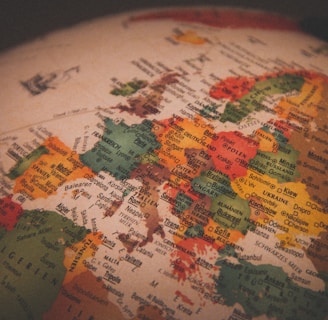
London → Paris → Amsterdam → Prague → Vienna → Venice → Florence → Rome
There's a reason the Grand Tour has endured for centuries. Long before Instagram or Lonely Planet, young aristocrats set off from Britain with leather-bound journals and an insatiable hunger to absorb Europe's art, philosophy, architecture, and food. The itinerary was roughly the same then as it is now: England, France, the Low Countries, German-speaking lands, and the glittering jewel-box cities of Italy. Today, you don't need a title or a trust fund. You need a valid passport, a rail pass, a spirit of adventure, and fourteen days.
This is a journey of radical contrasts — the fog-draped Thames giving way to Parisian boulevards; cobblestoned Amsterdam canals melting into the medieval gold of Prague; Vienna's imperial grandeur dissolving into the waterlogged dreamscape of Venice; and finally, the ancient, chaotic, magnificent mess of Rome. No two consecutive days feel remotely the same. That's the point.
We recommend roughly 3 "base" destinations for a 2-week Europe trip, plus a couple of day trips mixed in. But for the Grand Tour, we push that a bit — this is a sweep across a continent, and it demands movement. The pace is brisk but never frantic. You'll spend at least two nights in most cities, long enough to stop rushing and start seeing. Budget-conscious but never cheap-feeling, this itinerary leans on trains, hostels with soul, neighbourhood bistros, and market lunches over tourist-trap set menus.
Estimated daily budget: $80–130 USD per person (excluding international flights), covering budget accommodation, transport between cities, meals, and most entry fees.
⭐ Hidden Gems are marked throughout this guide — these are lesser-known spots that locals love and tourists rarely find. You can also view this itinerary in the app and customize it for your own trip.
Day 1–2: London, England — Where the Tour Begins
Day 1 Morning
You land at Heathrow or Gatwick, bleary but buzzing with anticipation. Grab the Elizabeth line from Heathrow directly to Paddington (30 minutes, ~£12), or the Gatwick Express to Victoria (30 minutes, ~£20). Getting around London is straightforward once you grab an Oyster card from any Tube station — do this immediately. It'll save you money and sanity on every journey.
Check into The Hoxton, Shoreditch, one of London's most beloved mid-range boutique hotels. The Hoxton Hotels are buzzing with activity in the lobby, with free Wi-Fi, loaner bikes, and a little bag of granola, orange juice, and a banana hung on your doorknob before you wake up. Each property also prides itself on advocating the best local shops and tours in its neighborhood, favoring local-owned businesses over corporate formula. It's stylish, affordable by London standards (rooms from ~£100), and plonked in one of the city's most vibrant neighborhoods. You stay here both London nights.
After checking in or dropping bags, head straight for Borough Market on the South Bank for a late breakfast/brunch — a labyrinth of artisanal cheese, sourdough, Ethiopian stews, and fresh-pressed juice where Londoners have been shopping since the 13th century. Grab a salt beef bagel or a famous Scotch egg and wander. Entry is free.
Day 1 Afternoon
Cross the Millennium Bridge (free, iconic) and spend the afternoon at the Tate Modern — London has free world-class museums, and the Tate is one of its crown jewels, a vast former power station housing Warhol, Rothko, Picasso, and some of the most challenging contemporary installations anywhere on earth. Go in with no agenda, wander up, and let something unexpected stop you in your tracks.
From there, stroll along the South Bank toward Waterloo Bridge for the city's best skyline view — St. Paul's dome, the Shard, the towers of the City all lined up like a history book spine.
Day 1 Evening
For dinner, head to ⭐ Casse-Croûte on Bermondsey Street, one of London's most beloved hidden gems. This tiny slice of Paris on Bermondsey Street is so inconspicuous, even locals do a double take. But step inside and you're met with gingham tablecloths, handwritten menus in looping French cursive, and a chalkboard bearing the holy trinity of rustic French fare. It's an appropriate aperitif for the Paris days ahead. Mains around £20. Book ahead — it fills up fast.
End the evening with a pint at a proper London pub. The Southwark Tavern (near London Bridge) is large, warm, buzzing, and very much non-touristy. Order a pint of Timothy Taylor's and raise a glass to the road ahead.
Day 2 Morning
Rise early. Visit the British Museum when it opens at 10 AM to beat the crowds. The Rosetta Stone, the Elgin Marbles, the Lewis Chessmen — this is one of the greatest collections of human history under one roof, and it's completely free. Spend at least two hours here; you could spend two weeks.
For breakfast before, grab a flat white and a pastry at Attendant Coffee in Fitzrovia — a cafe built inside a converted Victorian underground toilet, now one of the city's coolest morning stops. Only in London.
Day 2 Afternoon
After the British Museum, walk east through Bloomsbury toward Covent Garden, London's charming market district of street performers, independent shops, and tucked-away pubs. Walk through Covent Garden to the Thames.
Then jump on the Tube to the Tower of London. Start at the Tower of London and book your tickets online to skip the main line. Entry is around £34, but for 1,000 years of royal drama — executions, crown jewels, Beefeaters — it's worth every penny. Don't miss the Crown Jewels; they're genuinely staggering.
Directly across Tower Bridge is ⭐ the Founder's Arms, a classic South Bank pub worth noting for a quick afternoon drink. Located on the South Bank, the Founder's Arms offers a combination of classic British pub fare and panoramic views of the Thames, and is great for its proximity to cultural landmarks such as the Tate Modern. Order a pint and watch the river traffic roll past.
Day 2 Evening
For a cheap, locals-only London dinner before tomorrow's departure, try ⭐ Singburi in Leytonstone — East London's legendary Thai secret. Locals will groan that this one made the list. No-frills, cash-only, and nestled between a corner shop and a laundrette, it looks like nothing from the outside — dishes change daily, scrawled on a whiteboard: crispy pork belly with holy basil, stir-fried clams in chilli jam, jungle curries that melt your face in the best way. A full meal costs around £15–20. Cash only, no reservations.
Practical Tips — London:
🚇 Use your Oyster card for all Tube travel; daily cap is ~£8.10 for zones 1–2
🏛️ Most major museums are FREE (British Museum, National Gallery, V&A, Natural History Museum)
💂 Book Tower of London tickets online in advance
📋 US passport holders now need a UK ETA (Electronic Travel Authority) to enter — purchase it from the UK government's Electronic Travel Authority website or the UK ETA mobile app before you travel. Cost is around £10.
Day 3–4: Paris, France — The City of Light
Day 3 Morning (Travel Day)
Today you cross the Channel. Take the morning Eurostar from London St. Pancras to Paris Gare du Nord. The trip takes 2.5 hours. Book in advance for the best fares — from around £40 each way if you're early. There's something cinematic about arriving at Gare du Nord: the high vaulted ceilings, the café-au-lait smells, the French sounding like music you half-remember from a dream.
Drop your bags at Generator Paris — a buzzy, centrally-located hostel-meets-boutique hotel in the 10th arrondissement. Generator has comfy places to rest your head, spaces to party and connect with like-minded travelers — and their hostels and boutique hotels each have something special to offer. Private rooms from around €70. You'll stay here both Paris nights.
Then: straight to Montmartre. Skip the Louvre on your first afternoon — you'll see it tomorrow. Instead, wind your way up the hill to Sacré-Cœur, the white wedding-cake basilica perched above the city. The climb is free, the view is breathtaking, and the neighborhood below — full of tiny cafes, wine bars, and street artists — is one of Paris's most atmospheric. Explore Paris and its charming neighborhoods like Montmartre.
Day 3 Afternoon
Lunch in Montmartre at ⭐ Le Vieux Bistro (not to be confused with the Île Saint-Louis restaurant of the same name) — or better yet, pick up a jambon-beurre from any boulangerie and eat it on the steps of the Sacré-Cœur. This is a perfectly Parisian thing to do and costs about €4.
In the afternoon, wander the Marais district — the city's historic Jewish quarter and now its hippest neighborhood, where medieval townhouses sit next to contemporary art galleries and vintage boutiques. Pop into the Centre Pompidou (free on the first Sunday of each month; otherwise ~€15) for a dose of modern art and the city's best rooftop view.
Day 3 Evening
Dinner at ⭐ Le Baratin in Belleville — one of Paris's most fiercely local bistros. Dining at Le Baratin during a Paris trip honestly feels like discovering a secret local spot. The place isn't fancy or touristy at all, but the food has warm, homemade French charm. The atmosphere was cozy, filled mostly with locals — it's the kind of restaurant where you sit back, relax, enjoy good wine, and forget you're in one of the busiest cities in the world. Mains around €18–24. The menu is in French — bring Google Translate. Reservations strongly recommended (they're notoriously hard to get; call ahead or try your luck at lunch).
Day 4 Morning
Today: the Louvre. Book Louvre tickets online and arrive by 8:30 AM. Yes, it's enormous. Yes, it's crowded. Yes, the Mona Lisa is smaller than you expect. But the Winged Victory of Samothrace at the top of the grand staircase will hit you somewhere in the chest you weren't expecting. Budget two hours, then escape before the tourist masses fully descend.
Lunch nearby at ⭐ Les Enfants du Marché — tucked inside the Richard Lenoir market near the Place de la Bastille. Les Enfants du Marché is among the best hidden gems in Paris for fresh market gourmet cuisine. Tiny, joyful, run by a team that loves wine as much as food. A three-course lunch with a glass of natural wine for around €25 — extraordinary value in this city.
Day 4 Afternoon & Evening
Spend the afternoon on the Seine's Left Bank — strolling through the bookstalls of the bouquinistes along Quai de Montebello, ducking into Shakespeare and Company (the legendary English-language bookshop), and sitting in a café on Boulevard Saint-Germain nursing a realistically expensive espresso.
At sunset, walk to the Eiffel Tower. Visit the Eiffel Tower at sunset to avoid daytime crowds. You don't need to go up (queues can be monstrous); simply watching it from the Trocadéro plaza as the golden hour light rolls across the Seine is one of the great free experiences in Europe. At nightfall, it sparkles — literally — for five minutes every hour on the hour. Stay for it.
For better city views with much shorter lines, try the Montparnasse viewing deck — better city views than the Eiffel Tower. Entry is around €18.
Dinner tonight at Breizh Café in the Marais — best for authentic Breton crepes and hard cider. Galettes (savory buckwheat crepes with ham, egg, and Gruyère) for around €14, washed down with a bowl of dry Breton cider. Simple perfection.
Practical Tips — Paris:
🚇 Buy a carnet of 10 metro tickets for better value, or use contactless payment
🎭 Book the Louvre online in advance; long queues for walk-ins
🛍️ Browse the Marché d'Aligre on weekend mornings for the cheapest, most local market experience in Paris
💡 First Sunday of each month = free entry to most national museums
Day 5–6: Amsterdam, Netherlands — Canals and Canvas
Day 5 Morning (Travel Day)
From Paris Gare du Nord, take the Thalys/Eurostar train to Amsterdam Centraal (~3.5 hours, from €40). The journey cuts through flat northern France and Belgium — good napping territory, or watch the windmills appear as you cross into the Netherlands.
Cruise Amsterdam's canals — this is inevitable and wonderful. But first, check into MEININGER Amsterdam City West, one of the city's best budget-friendly hotels. MEININGER offers central locations, incredible staff, comfy facilities like guest kitchens and game zones, with budget-friendly dorms for backpackers and double rooms for couples. Private doubles from around €80/night. You stay here both Amsterdam nights.
Grab lunch at ⭐ Foodhallen, Amsterdam's extraordinary indoor food market. Foodhallen is a trendy indoor food market located in the former tram depot of Oud-West neighborhood in Amsterdam, featuring over 20 diverse food stalls offering a wide range of global cuisines, from Greek meze to Vietnamese summer rolls, American barbecue to wood-fired pizzas. Possibly the best food hall visitors have ever been to — many go four nights in a row, eating something different every time. Budget €12–18 per person.
Day 5 Afternoon
After lunch, rent a bike from MacBike near Centraal Station (~€14/day) and experience Amsterdam the way Amsterdammers do — from the saddle. Pedal through the Jordaan neighborhood, the city's most charming quarter of narrow canal bridges, independent galleries, and brown cafés (bruine kroegen) where regulars nurse Heineken from mid-afternoon.
Lock your bike up and visit the Anne Frank House — tickets can be pricey (~€16), but this is a must and one of the most moving historical sites in Europe. Book well in advance online; time slots sell out weeks ahead.
Day 5 Evening
Take an evening canal cruise in Amsterdam. Several operators run 1-hour evening cruises from ~€15; the Blue Boat Company and Lovers Cruises are solid choices. Watching the 17th-century merchant houses reflect in the black canal water, lit by lamplight, is one of those sights that embeds itself permanently in your memory.
For dinner, keep it cheap and local. One of Amsterdam's favourite budget restaurants, De Lekkere Beet, directly translates to 'The Yummy Bite' — huge portions of wholesome Dutch grandma-style cooking will fill your stomach without emptying your wallet. Find it at Eerste Helmersstraat 33. Mains around €13.
Day 6 Morning & Afternoon
Morning at the Rijksmuseum — home to Rembrandt's Night Watch and Vermeer's The Milkmaid, arguably the finest collection of Dutch Golden Age painting on earth. Book online (€22.50); allow at least 2 hours. Rijksmuseum's gardens are equally as wondrous and completely free — a beautiful, peaceful spot to admire sculpture, installations, and water features.
Lunch at ⭐ New Fusion in the Bijlmer district — a modern crossover of Surinamese, Chinese, and Indonesian traditions where locals favour Surinamese-Chinese classics like moksi meti and char siu slow-roasted pork. The normal moksi meti at €10 is a steal. This is the Amsterdam that tourists miss entirely — a glimpse into the city's wonderfully layered multicultural identity.
In the afternoon, wander through the Van Gogh Museum (book online, ~€22) — a stunning, chronological journey through Vincent's turbulent genius. Even if you think you know his work, standing three feet from the actual Starry Night studies and Sunflowers canvases is different.
Day 6 Evening
Drinks tonight among the locals at Brouwerij 't IJ, a microbrewery improbably located inside a 19th-century windmill in Amsterdam East. Order a Zatte (triple) or Columbus (IPA) and drink it standing outside under the sails. Around €3.50 per pint. Then cross the city for dinner in the Jordaan at Moeders ("Mothers") — a gloriously quirky Dutch restaurant where the walls are covered in thousands of framed photos of mothers sent in by customers, and the menu is hearty Dutch home cooking. Mains €15–22.
Practical Tips — Amsterdam:
🚲 Rent a bike — it's the single best way to see the city and costs less than public transport over a day
📋 Book Anne Frank House and Van Gogh Museum weeks in advance; they sell out
⚠️ Watch for trams when cycling — they won't stop for you
🇳🇱 Try bitterballen (fried beef ragù balls) at any brown café — they're unlikely to be more than €3 and are about as Dutch as orange clogs, and surprisingly filling
Day 7–8: Prague, Czech Republic — The Golden City
Day 7 Morning (Travel Day)
From Amsterdam, take a Flixbus or overnight train to Prague (approximately 11–13 hours by train, or ~9 hours by direct bus — book Flixbus or Regiojet from €25). Alternatively, budget airlines (Ryanair, Wizz Air, easyJet) fly the route in about 1.5 hours from Amsterdam Schiphol for as little as €30 one-way. Flying is the time-saver here; prioritize it if your schedule is tight.
Arrive in Prague and check into Mama Shelter Prague — the Mama Shelter brand launched in Paris in 2008. Its Prague outpost is just outside the tourist trail but close enough that the sights are still accessible, with 238 rooms offering quirky art and free movies, and the best outlook from a sunny terrace bar — a sociable place to grab an afternoon spritz or a late-night pizza. Rooms from ~€65/night. You stay here both Prague nights.
Prague (along with Krakow and Budapest) is among the most affordable places visited in Europe — anywhere using the euro or pound is a much more costly vacation. Your money stretches dramatically further here.
Day 7 Afternoon
After dropping bags: Prague Castle. Visit Prague Castle first thing in the morning or early afternoon — arrive before the crowds hit and you can have the courtyards almost to yourself. The castle complex is vast — St. Vitus Cathedral, the Old Royal Palace, the Golden Lane (a tiny street of medieval cottages built into the castle walls). Entry to the grounds is free; the circuit ticket (€14) covers the interior highlights.
Walk down through Malá Strana (Little Quarter) — the baroque neighborhood tumbling down the castle hill, all pastel-colored palaces and cobbled lanes — and cross the Charles Bridge on foot. Prague enchants with its Gothic architecture, the iconic Charles Bridge, and Prague Castle. Lined with 30 black-stone Baroque statues, the bridge is genuinely one of the most beautiful structures in Europe. Go at dusk when the light turns amber and the tourist hordes thin.
Day 7 Evening
Dinner in the Vinohrady neighborhood — the locals' preferred dining district, far from the tourist scrum of the Old Town. ⭐ Lokál Vinohrady is a beloved Prague institution: a high-ceilinged Czech pub serving tank-fresh Pilsner Urquell poured perfectly, alongside slow-braised pork knee, svíčková (sirloin in cream sauce), and fried Olomoucký cheese. A full meal with two beers costs around €10–15. This is real Czech pub culture, and it's joyful.
Day 8 Morning & Afternoon
Morning: Old Town Square and the Astronomical Clock (Orloj) — every hour, on the hour, the medieval clock puts on its little mechanical show. It's touristy, but also 600 years old and genuinely impressive. Watch your step on the cobblestone streets when wet.
Then lose yourself in the Jewish Quarter (Josefov) — six synagogues and the oldest Jewish cemetery in Europe, a haunting layered city of gravestones tumbling over each other. The combined ticket (~€22) covers all the sites and includes the Pinkas Synagogue, its walls covered in the hand-painted names of 78,000 Bohemian Holocaust victims.
Lunch at a local spot: ⭐ Nase Maso ("Our Meat") in the Old Town — a local butcher-deli hybrid where you eat standing at a counter, choosing from a blackboard menu of open sandwiches, beef tartare with rye bread, and the best goulash in the city. Around €8–12 for a full lunch. A local institution; tourists walk past it a hundred times without noticing.
Day 8 Evening
This evening, cross the river for drinks in ⭐ Letná Park — a vast hilltop green space beloved by Prague's locals, with a legendary beer garden overlooking the entire city. Order a Kozel dark for around €2 and watch the sun slide behind the cathedral towers. This is the Prague that postcards don't show.
Practical Tips — Prague:
💰 Prague is the budget traveler's dream — a restaurant meal rarely costs more than €15, a beer costs €1.50–3, and tram tickets are under €1
🚋 Trams are the best way to get around; buy a 24-hour pass for ~€3.50
📋 Jewish Quarter tickets must be bought at the Visitor Centre — book online to avoid queues
⚠️ Be alert for scams around tourist areas, particularly money changers offering "good rates" — always use ATMs or bank-affiliated exchanges
Day 9–10: Vienna, Austria — Imperial Grandeur
Day 9 Morning (Travel Day)
Take the Regiojet or FlixBus from Prague to Vienna (4.5 hours, from €15) or the direct train (4 hours, from €29 booked in advance on ÖBB). The landscape shifts beautifully — rolling Bohemian hills give way to the Danube plains and the first sight of Vienna's church spires.
Check into Wombat's City Hostel Vienna — The Lounge — repeatedly voted one of the best hostels in Europe, located near the Westbahnhof with excellent transport links. Private rooms from ~€75/night. You stay here both Vienna nights.
Vienna is a first-tier city with second-tier prices — making it arguably the finest value-for-experience destination on this entire Grand Tour. Imperial palaces, world-class opera, extraordinary museums, all in a city that is somehow more affordable than Paris or London.
Start the afternoon at Schönbrunn Palace — Vienna's Schönbrunn Palace and its musical heritage are among Austria's greatest highlights. The palace gardens are free (the interiors range from €16–35 depending on the tour), and the hilltop Gloriette viewpoint above the garden offers a sweeping panorama of the city. Take the Grand Tour of the palace rooms — the sheer excess of Habsburg decoration is almost comedically magnificent.
Day 9 Evening
Wander back through the Naschmarkt — Vienna's greatest outdoor market, a 1.5km stretch of food stalls selling everything from Styrian pumpkin seed oil to Turkish baklava to Austrian Liptauer cheese. Even at closing time it buzzes. This is the best cheap dinner in Vienna: graze your way along the stalls for €10–15.
Spend the evening at the Vienna State Opera (Staatsoper). Don't panic about prices: standing room tickets go on sale 80 minutes before each performance for just €3–10. Yes, seriously. You'll stand for three hours, but you'll stand in one of the most beautiful opera houses ever built, watching world-class singers perform in an acoustically perfect hall. Dress respectably but not formally. This is not to be missed.
Day 10 Morning & Afternoon
Morning at the Kunsthistorisches Museum (KHM) — Vienna's answer to the Louvre, housing one of the world's greatest collections of Old Masters: Bruegel, Velázquez, Vermeer, Caravaggio. Entry is €21, but the building itself — a symphony of marble, gilded stucco, and painted ceilings — is itself a work of art worth the price.
For lunch, step into ⭐ Café Hawelka on the Dorotheergasse — a legendary Viennese coffee house open since 1939, still run by the founding family. Order a Melange (Vienna's signature milky coffee) and a slice of Buchteln (sweet yeasted buns with plum jam, only served in the evening). The interior looks exactly as it did in 1960: worn wooden booths, faded photographs, intellectuals reading newspapers. Around €6–10. Vienna has free world-class churches — and the Stephansdom cathedral, looming over the city center, is free to enter and heart-stopping in its Gothic grandeur.
Day 10 Evening
Stroll the Ringstrasse — Vienna's grand boulevard of 19th-century imperial buildings — as the evening light turns them gold. End with dinner at Zum Wohl in the 7th district: a wine bar run by young Austrian sommeliers pouring excellent Grüner Veltliner and Blaufränkisch by the glass alongside cold-cut boards and seasonal small plates. Around €20–30 for food and wine. The Viennese love this place; tourists barely know it exists.
Practical Tips — Vienna:
🎭 Staatsoper standing room: arrive 90 minutes before curtain to queue for €3–10 tickets (cash only at the box office)
☕ Viennese coffee house culture is UNESCO-listed; you can nurse a Melange for an hour without being rushed — this is a sacred local tradition
🏛️ The Vienna Museum Card (~€32 for 3 days) covers most major museums including KHM
🎻 Free lunchtime organ concerts are held at Stephansdom on most weekdays
Day 11–12: Venice, Italy — The Floating City
Day 11 Morning (Travel Day)
From Vienna Hauptbahnhof, take the direct train to Venice Santa Lucia (~6 hours, from €29 on Trenitalia booked in advance). The route crosses the Alps through Innsbruck and the Brenner Pass — pack a window seat and watch mountains replace plains in real time.
Venice greets you like a hallucination. The train station opens directly onto the Grand Canal, and when you first step out and see boats where roads should be, the impossible ordinariness of it all hits you like a cold wave. There are no cars. There never have been.
Check into Generator Venice — situated in Giudecca island, connected to the main island by vaporetto, with some of the cheapest beds in the city and a rooftop terrace with ridiculous lagoon views. Private rooms from ~€90/night. You stay here both Venice nights.
Take a vaporetto (water bus, ~€9.50 for a 75-minute pass) along the Grand Canal — the best introduction to the city, snaking between Renaissance palazzos and Gothic churches with a gondolier's soundtrack of slapping water and seagull cries. Sit at the bow.
Day 11 Afternoon & Evening
Spend the afternoon in San Marco — the Basilica di San Marco is free to enter (join the queue early; no shorts or bare shoulders), and its interior of Byzantine gold mosaics is one of the most extraordinary spaces in Christendom. Then climb the Campanile (~€10) for the city's finest 360-degree view — flat horizon, terracotta rooftops, silver lagoon.
For dinner, escape San Marco and head to Cannaregio — the locals' quarter. The quieter northern reaches of the Venetian lagoon feel completely different from the tourist centre. Find ⭐ Trattoria al Gatto Nero off the tourist trail — a family-run osteria serving hand-made bigoli pasta in duck ragù, fried lagoon fish, and local Soave wine. Around €20–28 for mains. No English menus posted outside. That's the point.
For the cheapest eat in Venice, hit a bacaro (Venetian wine bar) and order cicchetti — small snacks of salt cod, marinated artichokes, and fried polenta served on bread, usually €1–2 each. All'Arco near the Rialto Market is the most celebrated in the city; arrive early as the best cicchetti sell out by noon.
Day 12 Morning & Afternoon
Morning at the Rialto Market — Venice's extraordinary fish market where the lagoon's catch arrives at 6am and the stallholders shout the morning's haul. It's free to wander, spectacular to photograph, and deeply Venetian. Panoramic trains and scenic journeys are a feast for the senses with spectacular scenery — so too is this market, in its own watery, fish-scented way.
Then: the Gallerie dell'Accademia (~€15) — Venice's greatest art museum, housing Bellini, Tintoretto, Giorgione, Titian, and Veronese in an old convent-turned-gallery. This is not a tourist obligation; it is genuinely one of the most beautiful art collections in the world.
In the afternoon, take the vaporetto to the island of Murano (free with your vaporetto pass), where the Venetian glass-blowing tradition has been practiced for 700 years. Watch a live demonstration (free in most studios), and if you want to buy something, the Murano glass is dramatically better value here on the island than in the tourist shops of San Marco.
Day 12 Evening
Take the vaporetto back at dusk and walk across the Accademia Bridge as the sun melts behind the Salute church — it's arguably the most beautiful view in a city of beautiful views. Dinner at ⭐ Osteria alle Testiere in Castello — a tiny, 22-seat restaurant run by a chef-sommelier duo, one of Venice's best kept secrets. The menu changes daily based on the morning's market haul; expect exquisite raw seafood, barely-seared scallops, and pasta with cuttlefish ink that stains your lips gloriously. Around €35–45 per person. Book at least a week in advance — it's tiny and very sought after.
Practical Tips — Venice:
🚢 Buy a 48-hour vaporetto pass (~€38) rather than single tickets if you plan to use the boats frequently
👕 Cover up for churches — carry a scarf or light layer (no shorts or sleeveless tops)
⏰ Arrive at the Rialto market before 9am for the best atmosphere
💧 Venice tap water is safe and delicious — fill a bottle at any of the ornate drinking fountains (fontanelle) scattered around the city
Day 13: Florence, Italy — The Renaissance in a Day
Day 13 Morning (Travel Day)
From Venice Santa Lucia, take the high-speed Frecciarossa to Florence Santa Maria Novella (~2 hours, from €20). In the time it takes to drink a coffee and read your Kindle, you've crossed from the lagoon-city to the Renaissance capital.
Check into Plus Florence — a well-regarded budget hotel-hostel hybrid near the station with a pool, which feels impossibly luxurious at these prices. Private rooms from ~€70. You stay just one night.
Florence is your one-day blitz — a city that could absorb weeks but can, in a perfect 18 hours, yield something absolutely overwhelming. Go straight to the Uffizi Gallery — Florence's Renaissance masterpieces await. Book online well ahead (~€20 + booking fee). Botticelli's Birth of Venus, da Vinci's Annunciation, Michelangelo's Doni Tondo — room after room of paintings that changed the history of how humans see themselves. Allow two hours minimum.
Lunch at ⭐ Trattoria Mario near the Mercato Centrale — a legendary Florentine institution open since 1953 that requires sharing long communal tables with strangers. Italy offers authentic pasta, pizza, and the fine wines of Tuscany. The menu is handwritten daily: ribollita (bread soup), bistecca alla Fiorentina (if your budget allows), and pasta e fagioli. Cash only. Expect to queue. Around €12–18 for a full meal. This is the cheapest and most authentic eat in Florence.
Day 13 Afternoon
After lunch, cross the Ponte Vecchio — the medieval bridge lined with goldsmiths, the only Florentine bridge spared by the retreating Germans in 1944 — and climb the Boboli Gardens behind the Pitti Palace (~€10) for terraced views across the Arno valley.
At 4pm, join the queue (or book online) for the Galleria dell'Accademia (~€12 + booking fee) — home to Michelangelo's David. You've seen the photos a thousand times. You are not prepared. The scale, the detail, the furrowed brow and the slingshot relaxed at his hip — it is one of the most extraordinary moments of recognition in all of travel.
Day 13 Evening
For dinner in Florence, head to the Oltrarno neighborhood (south of the Arno) — the locals' side of the city, full of artisan workshops, independent restaurants, and far fewer tour groups. Buca Mario, founded in 1886, claims to be Florence's oldest restaurant: terracotta floors, Florentine classics, and a warmth that 130 years of business has only deepened. Ribollita and grilled pork ribs for around €20–30.
End the evening with a gelato from Gelateria dei Neri — one of Florence's most beloved gelaterias, with rotating seasonal flavors and a legendary pistachio. Around €2.50 for a small cone. Walk the Ponte Vecchio one more time in the dark, watch the Arno's reflection shiver, and feel completely, happily overwhelmed.
Day 14: Rome, Italy — All Roads Lead Here
Day 14 Morning (Travel Day)
Your final destination. Take the Frecciarossa from Florence to Roma Termini (~1.5 hours, from €19). As you pull into the outskirts of Rome — past graffitied walls, ancient aqueducts, umbrella pines — you'll feel the city's weight before you even arrive. Rome is not a city. It is a civilization.
Get to major sites early, before 9 AM, to avoid crowds. Head straight for the Colosseum and the Roman Forum — book online (~€16 combined), and arrive the moment it opens. Rome's ancient wonders like the Colosseum and Vatican City await. Standing in the Colosseum's arena, you're in the same spot where 50,000 Romans once roared for gladiators. The Forum, meanwhile, is the ruins of the center of the known world, and somehow that knowledge makes the broken columns and crumbling temples feel vast rather than diminished.
Lunch on the cheap at ⭐ Trattoria da Enzo al 29 in Trastevere — a tiny, family-run Roman institution that has been slapping cacio e pepe and coda alla vaccinara on paper-covered tables for decades. Locals eat at noon; tourists trickle in at 1pm. Go at noon. Around €15–20 for a pasta dish and a carafe of house wine. No reservations for small parties at lunch — just turn up.
Day 14 Afternoon
Afternoon at Vatican City — the Sistine Chapel and St. Peter's Basilica. The Sistine Chapel (accessed via the Vatican Museums, ~€20, book online) requires a separate justification from all the hype: Michelangelo's ceiling is so much more complex, so much more moving, and so much harder to photograph than anyone ever tells you. Stand under The Creation of Adam and say nothing for a minute.
St. Peter's Basilica itself is free. The climb to the dome (~€8) is the best view in Rome — the entire city laid out in a circle of ochre and terracotta and green.
Day 14 Evening
Your last evening in Europe. Walk to the Trevi Fountain — throw your coin, make your promise to return. Then wander northwest to the Pantheon (entry now €5), a 2,000-year-old temple to all gods that is still, somehow, perfectly intact and in regular use. Step inside and look up at the oculus — the hole in the dome open to the sky — and let the math of the thing settle over you: the dome's diameter equals its height, a perfect sphere balanced on perfect geometry, built by Romans who had no computers and no reinforced concrete.
Dinner on your final night at Ristorante Grappolo d'Oro near the Campo de' Fiori — a straightforward, honest Roman trattoria serving supplì (fried rice balls with tomato and mozzarella), saltimbocca alla Romana, and tiramisu that ends the meal with appropriate drama. Around €25–35 per person.
Close the evening with a final gelato from Della Palma near the Pantheon, or simply sit at a table outside any bar on the Campo de' Fiori with a glass of cold white wine and watch the city swirl around you. You have crossed a continent. You have stood in front of things that humans made thousands of years ago and felt genuinely small. You have eaten well, slept adequately, and spent significantly less than expected.
That's the Grand Tour. It's always been about exactly this.
Practical Tips — Rome:
📋 Book the Colosseum and Vatican Museums online — queues for walk-ins can be 2–3 hours
🚌 Rome's bus network is cheap (~€1.50/trip) and covers the whole city; the Metro is limited but useful for long hauls
⛲ Drinking fountains (nasoni) are everywhere in Rome — the water is fresh, cold, and delicious
👕 Cover up for all Vatican and church visits — shoulders and knees must be covered; there's no exceptions
🍕 A slice of pizza al taglio (sold by weight at street-level pizza shops) costs ~€3–5 and is often the best food you'll eat all day
Grand Tour Logistics: Getting It All Together
The Rail Question
A guide to traveling Europe by train is invaluable for this itinerary. The key inter-city legs are:
London → Paris: Eurostar (~2.5 hrs, book at eurostar.com)
Paris → Amsterdam: Thalys/Eurostar (~3.5 hrs, book at eurostar.com)
Amsterdam → Prague: Flixbus/budget airline (~9–13 hrs by bus; ~1.5 hrs by air)
Prague → Vienna: Train or bus (~4–4.5 hrs, book at cd.cz or obb.at)
Vienna → Venice: Train (~6 hrs, book at trenitalia.com)
Venice → Florence: Frecciarossa (~2 hrs)
Florence → Rome: Frecciarossa (~1.5 hrs)
Passports & Entry
This tour visits the United Kingdom, France, the Netherlands, Czech Republic, Austria, and Italy. U.S. and Canadian citizens need a valid passport with an expiration date extending at least six months beyond the date of reentry. There is no visa required for U.S. or Canadian citizens to enter France, the Netherlands, Austria, or Italy. However, U.S. and Canadian passport holders must purchase a UK ETA from the UK government website to enter the United Kingdom.
Note: As of 2025, the EU's ETIAS (European Travel Information and Authorization System) is expected to be introduced — check current requirements before travel, as it may apply to U.S. citizens entering Schengen Area countries.
Budget Summary (Per Person, Per Day)
London — Accommodation: £40–55 | Food: £30–45 | Transport & Entry: £25–40 | Total: £95–140 (~$120–$175)
Paris — Accommodation: €35–50 | Food: €35–50 | Transport & Entry: €20–35 | Total: €90–135
Amsterdam — Accommodation: €40–55 | Food: €30–45 | Transport & Entry: €25–35 | Total: €95–135
Prague — Accommodation: €30–40 | Food: €15–25 | Transport & Entry: €15–25 | Total: €60–90
Vienna — Accommodation: €35–50 | Food: €20–35 | Transport & Entry: €20–35 | Total: €75–120
Venice — Accommodation: €45–60 | Food: €25–40 | Transport & Entry: €25–40 | Total: €95–140
Florence — Accommodation: €35–50 | Food: €20–35 | Transport & Entry: €25–40 | Total: €80–125
Rome — Accommodation: €35–50 | Food: €20–35 | Transport & Entry: €25–40 | Total: €80–125
Excluding international flights. Budget roughly $1,000–1,500 for inter-city trains and buses.
Sources & Inspiration
Turn This Itinerary Into Your Personal Trip Plan
If you're feeling inspired to plan your own adventure, BTravelrs is here to help! You can view this itinerary in the app, build and customize your own trip from it, and easily book through our trusted partners like Booking.com for flights and accommodations, Economy Bookings for car rentals, Viator for experiences/tours, and Airalo for eSIMs, all in one place.
Booking through us allows BTravelrs to remain free to use and us to bring more amazing articles like this! 😉
Happy Travels!
Your Ultimate Travel Companion
Connect
© 2026. All rights reserved.


Say Hi!
Get the App